
Leave policy in Canada – A complete guide

Understanding leave policies in Canada is vital for you to manage teams efficiently and for your employees to help them navigate their workplace rights. A combination of provincial and federal laws governs Canadian leave regulations. This covers everything ranging from annual vacations and public holidays to parental, maternity, sick, and special leaves.
This guide also provides a complete overview of Canada’s policies, helping you stay compliant and helping employees understand their entitlements. Whether you are hiring in Canada or managing an existing workforce, understanding how leave regulations work is essential for smooth workforce compliance and planning.
More about Canadian employment leave regulations
The employee leave laws in Canada list the types of leave that they are legally entitled to take. Additionally, it also summarizes the conditions under which the leave can be applied. These policies were enacted to protect employees’ rights while ensuring compliance with labor laws.
In Canada, the federal and territorial/provincial employment standards handle policies. This means that employee entitlements can differ depending on factors such as the location of employment and whether the employer actually falls under the federal or provincial jurisdiction. Leave policies often cover vacation, public holidays, parental and maternity leave, sick leave, compassionate care leave, and other statutory leave.
A compliant leave policy clearly defines the eligibility, pay status, duration, and the process for applying for leave. For employers, having a well-documented leave policy can help ensure legal compliance, consistent workforce management, and transparent communication with employees. For employees, it provides better clarity on the rights and work-life balance protections.
What are the most common types of leaves in Canada?
Employees in Canada are allowed to avail themselves of various types of leave, which depend on federal or provincial employment standards. These leaves are fundamentally designed to support work-life balance while also addressing medical, family, personal, and civic responsibilities.
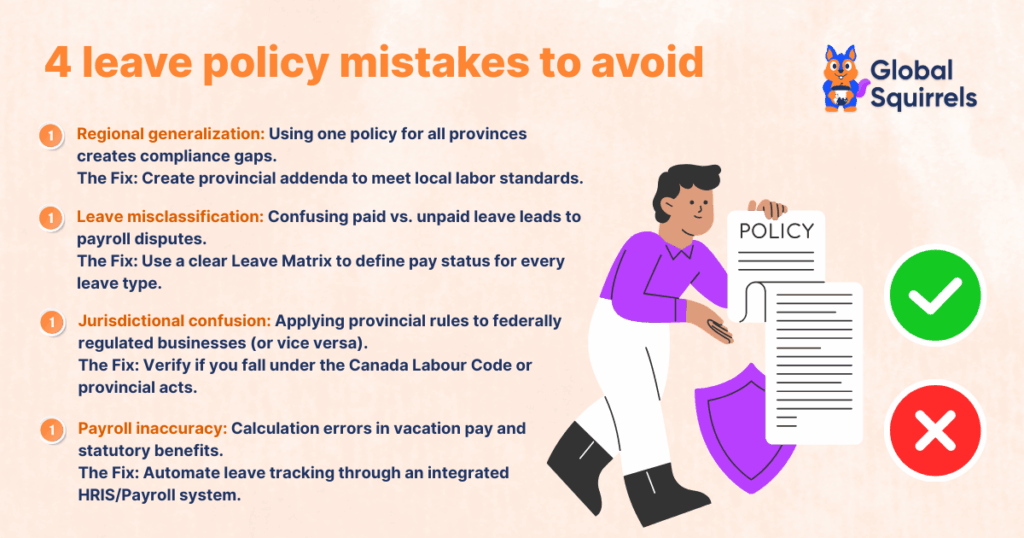
Understanding the types of leaves in Canada can help you stay compliant and ensure employees clearly understand their entitlements. Given below are the most common statutory leaves under Canadian law, along with common mistakes to avoid to keep your organization protected.
1. Public holidays
Public holidays in Canada are days when employees might be entitled to time off. This depends on the federal, provincial, or territorial employment laws. Canada does not follow a single national holiday calendar; instead, public holidays vary by province and territory, and whether federal or provincial labor standards govern you.
2. Annual paid leave or earned leave
The annual leave policy differs depending on certain factors. However, the federal government minimums under the Canada Labor Code apply to federally regulated employees as given below:
- After 1 year of service, you should enable 2 weeks of paid vacation
- After 5 years of service, you should allow 3 weeks of paid vacation
- After 10 years of service, you should allow 4 weeks of paid vacation
Vacation pay is usually around 4-6% of wages earned, and again, this depends on tenure.
3. Maternity leave
Maternity leave in Canada provides birthing women with job security and income.
| Feature | Details |
| Duration | Up to 15 weeks of maternity leave |
| Payment | Income replacement through EI maternity benefits (15 weeks at 55% of average earnings, up to the maximum insurable amount) |
| Protections | You cannot terminate employees during leave |
Source: Government of Canada
4. Parental leave
Parents are allowed to share this type of leave; however, each parent must take 5 weeks of leave individually.
| Type of leave | Duration |
| Standard parental leave | Up to 40 weeks total (max 35 weeks per parent) |
| Extended parental leave | Up to 69 weeks total (max 61 weeks per parent) |
5. Paternity leave
Canada does not have a separate statutory paternity leave. However, fathers and partners can use their parental leave allowances.
6. Sick leave
Both federal and provincial laws handle sick leave in Canada. Federally regulated employees can avail themselves of up to 10 days of paid medical leave each year. Meanwhile, provincially regulated employees have varying days of leave depending on the office location.
7. Casual leave
Under Canadian employment standards legislation, casual leave is not formally defined. However, employees can take short-term time off for personal reasons. This depends on provincial standards. Examples include bereavement leave, personal emergency leave, or jury duty leave.
8. Unpaid leave
Employees can take unpaid leave in certain circumstances, such as:
- Compassionate care leave: Employees can take up to 28 weeks to care for an ill family member
- Critical illness leave: Employees can take up to 37 weeks for a child and 17 weeks for an adult family member.
Looking to hire employees in Canada? Check our Canada hiring guide to see how businesses can onboard Canadian talent easily, compliantly, and cost-effectively.
Essential components to include in your leave policy
A well-structured leave policy in Canada enables legal compliance, transparency, and consistency for you and your employees. Given below are some of the vital components that every effective policy should include:
1. The types of leaves covered
You should clearly list all the applicable leaves, including vacations, sick leaves, public holidays, parental and maternity leave, bereavement, and any other special or statutory leaves.
2. Eligibility criteria
You should specify exactly who is eligible for each type of leave. This includes full-time, part-time, probationary, or contract employees.
3. Duration and limits of the leave
Clearly outline the number of days or weeks allowed for every type of leave, along with any annual caps or accrual rules.
4. Mention the paid and unpaid leaves
Clearly specify whether each leave is paid, partially paid, or unpaid, and how the pay is calculated when applicable.
5. Request and approval process for leave
Define how employees should apply for leave, required notice periods, approval workflows, and documentation needs.
6. Legal and compliance reference
Ensure the policy aligns with applicable labor laws and employment standards, noting that statutory requirements override internal policies.
Discover how Canadian work culture impacts employee engagement, leave expectations, and overall workforce management.
Final words
Maintaining legal compliance, workforce stability, and employee trust in Canada requires an understanding of and adherence to a compliant leave policy. For expanding enterprises, keeping current and consistent leave benefits can be difficult, as both federal and provincial laws govern them.
You can eliminate compliance risks and promote employee well-being by clearly outlining the types of leave, eligibility criteria, and procedures in your policy. If navigating through the leave laws becomes overwhelming, you can always consider working with a compliance-focused workforce solution provider to manage teams in Canada with confidence and clarity. This way, your leave policy in Canada will always be accurate, up to date, and compliant with legal regulations, also ensuring zero risks to your business.
